Lake Tahoe’s fire restoration plan includes controversial herbicide use across thousand of acres
LAKE TAHOE BASIN, Calif. – A yearlong investigation by Mother Jones is casting new scrutiny on the use of glyphosate in California forests at the same time the U.S. Forest Service Lake Tahoe Basin Management Unit plans to use the controversial herbicide across thousands of acres in the Lake Tahoe Basin.
Glyphosate, commonly sold under the brand name Roundup, is widely used to kill shrubs and hardwood vegetation that compete with replanted conifers after fires and logging operations.
However, the herbicide has long been controversial. In 2015, the cancer research arm of the World Health Organization classified glyphosate as a “probable carcinogen,” and manufacturer Bayer has paid more than $12 billion in settlements tied to lawsuits alleging the herbicide caused cancer.
The Mother Jones investigation analyzed more than 5 million California pesticide records and found glyphosate use in the state’s forests reached approximately 266,000 pounds in 2023 — nearly five times the amount used two decades ago. The report identified forest spraying as the fastest-growing use of the herbicide in California.
The investigation also reported that a U.S. Forest Service safety assessment relied heavily on a study later retracted after allegations that it had been ghostwritten by employees of Monsanto, the agrochemical company best known for producing glyphosate-based herbicides before being acquired by Bayer in 2018.
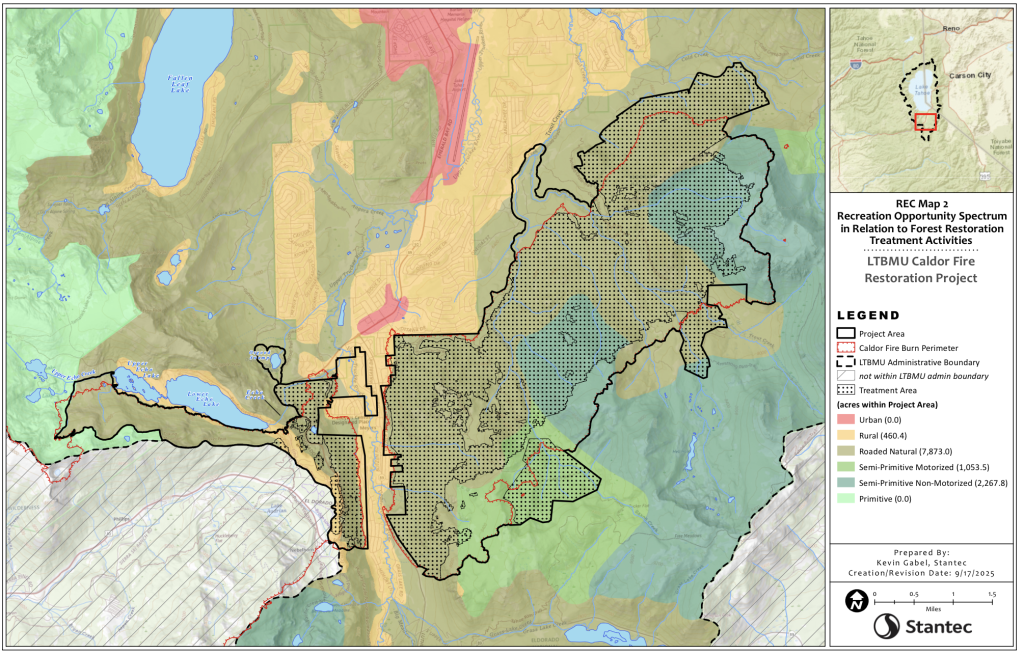
For the Tahoe Basin, the findings are particularly relevant since the Forest Service approved the Caldor Fire Restoration Project in March 2026, a large-scale restoration initiative covering approximately 11,100 acres of National Forest System land on the south shore of Lake Tahoe that includes planned herbicide treatments, including glyphosate.
Within the project, there are approximately 4,900 acres where the probability of natural forest regeneration is less than 40 percent. Of those acres, reforestation actions — which include herbicide treatment — are proposed on between 2,400 and 3,600 acres.
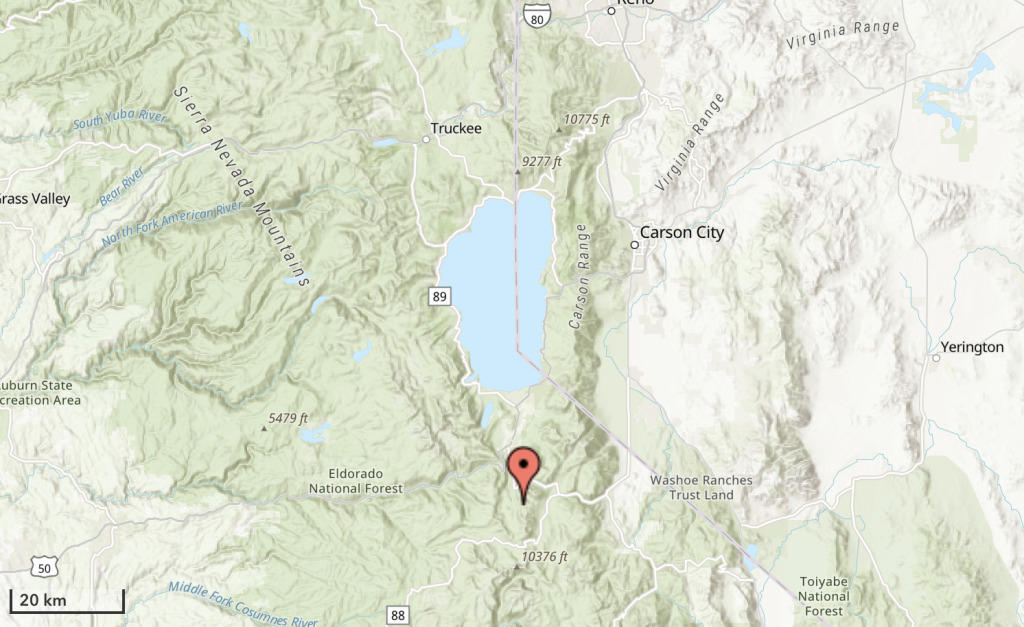
The project area stretches from the southern shoulder of Echo Lake near Highway 50 eastward above Meyers and South Lake Tahoe, encompassing large sections of public forestland frequently used for hiking, camping, backcountry recreation and foraging.
Since the Angora Fire, the Tahoe Regional Planning Agency and the United States Forest Service have operated under a Fuels Reduction and Forest Health Memorandum of Understanding to streamline permitting processes for forest health and fuels reduction projects.
While TRPA does not have jurisdiction over this project, they have reviewed and provided feedback on it.
According to TRPA, herbicide use is permitted under the agreement as long as it remains consistent with the TRPA Regional Plan and the agency’s Best Management Practices Handbook, particularly regarding limitations near stream environment zones.
“The safeguards and methods planned to be used will meet TRPA’s environmental standards.” said the organization. “The agency will continue to work with the LTBMU to ensure requirements are met, including signage and public notifications when the project is ready for implementation.”
During the National Environmental Policy Act stage for the Caldor project, TRPA requested that, because the project area experiences heavy recreational use, the Lake Tahoe Basin Management Unit notify the public where herbicide applications occur.
The action plan states herbicides would be applied using backpack sprayers or other low-volume methods to target the most competitive native plants. No aerial or aquatic application of herbicides would be used. Herbicide treatments would be used to assist with site preparation before tree planting and to manage competing vegetation after planting when manual treatments are ineffective or expected to be insufficient.
LTBMU said that despite the investigation, they have not discussed changes to the project. They added, “no herbicide application within the project area is expected in 2026/2027.”
Due to the continued deterioration of forest stands within the Caldor Fire burn area, the Lake Tahoe Basin Management Unit received an Emergency Action Determination for the project. The designation allowed the Forest Service to use emergency authorities to expedite implementation.
“Herbicides are used to treat invasive weeds in situations where manual removal is impractical or ineffective,” said a representative of LTBMU. “In some situations, shrub regrowth can shade-out seedlings, negatively affecting the survival rate.
“The Lake Tahoe Basin Management Unit has been thoughtful in its choice of areas for herbicide use, avoiding sensitive riparian habitats and times of year (June 1 to September 30) when pollinator species are most may have a higher chance of being impacted by application. The planned herbicide use associated with the Caldor Project is designed to be as minimal as possible and with the least amount of chemicals necessary.”
The overall project includes approximately 5,900 acres of wildland-urban interface land — the transitional zone where homes and infrastructure meet or intermingle with undeveloped wildland vegetation.
Preliminary survey work and site preparation activities are expected to begin spring 2026.
Officials stated the restoration project is intended to improve long-term forest resilience and help the landscape recover. But the scale of the proposed herbicide use near recreation-heavy public lands is drawing renewed attention as concerns about glyphosate continue nationwide.
A Change.org petition was started with the goal of stopping the use of glyphosate. As of Monday, May 11 at 7 a.m., there were 2,722 signatures.
Correction: This article has been updated to reflect that TRPA does not have jurisdiction over this project; they have just provided feedback on the project.
Do you have thoughts on this topic? Tell us your opinion at https://www.tahoedailytribune.com/submissions/letter-to-the-editor/
 Loading ...




Support Local Journalism
Support Local Journalism
Readers around the Lake Tahoe Basin and beyond make the Tahoe Tribune's work possible. Your financial contribution supports our efforts to deliver quality, locally relevant journalism.
Now more than ever, your support is critical to help us keep our community informed about the evolving coronavirus pandemic and the impact it is having locally. Every contribution, however large or small, will make a difference.
Your donation will help us continue to cover COVID-19 and our other vital local news.