More avalanche details: rescue shifts to body recovery

TRUCKEE, Calif. – Search and rescue teams are now shifting their focus to recovering the eight, potentially nine bodies, after rescuing six survivors Tuesday night from the avalanche site near Castle Peak.
“It’s a difficult conversation to have with loved ones,” Nevada County Sheriff, Shannon Moon said a press conference held Wednesday.
What started as a return trek from a three-day backcountry hut tour through Blackbird Mountain Guides turned into the deadliest avalanche in Tahoe’s known history.
16 group members were initially reported, however, as authorities gathered details from the tour company, they learned that one person backed out of the trip last minute. The group of 15 consisted of nine women and six men.
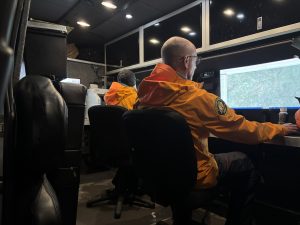
The emergency call hit the Nevada County dispatch at around 11:30 a.m. Tuesday, setting into motion a rescue response from agencies across California and Nevada, including Truckee Fire, the Tahoe Nordic Search and Rescue team, and the Washoe County Search and Rescue.
The rescue
Around 50 highly skilled and unwavering individuals gathered and entered the backcountry Tuesday afternoon despite heavy snow, high avalanche risk and gale force winds.
“Extreme weather conditions, I would say is an understatement,” Sheriff Moon expressed.
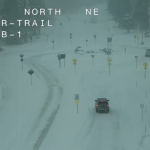
The conditions made getting equipment to the launch sites at Boreal Mountain Resort and Alder Creek Adventure Center difficult with I-80 closed at the time due to the snow levels.
In a sea of white, the rescue was slow going often with no visibility and took several hours. Eventually, the persistent team made it about two miles out from the avalanche site in the Snowcat and skied the remaining way due to high avalanche danger.
Survivors used iPhone SOS to communicate with rescuers. Those six were sheltering in place for hours using equipment they had.
Keeping warm wasn’t their only task. Able survivors had attended to two skiers who had sustained injuries that rendered them immobile.
Rescue teams arrived to the survivors at around 5:30 p.m. Tuesday night and extracted the two immobile survivors the two miles to the Snowcat, while guiding the remaining survivors who could ski on their own.
At 10:40 p.m. Tuesday, Nevada County Sheriff’s Office announced the successful rescue of the six survivors.
The victims
As the six survivors awaited rescue, those able had already started looking for missing members to their guide group. By the time rescuers found them, survivors had located three members of their tour group who had been killed by the avalanche.
Another five skiers were located dead, bringing the victim total to eight and surpassing the Alpine Meadows 1982 avalanche that killed seven. All eight were wearing beacons.
That leaves one skier unaccounted for, though presumed dead.
The event has particularly hit the Tahoe Nordic Search and Rescue team as one of the nine missing members is a spouse of a search and rescue team member.
“I think it’s also motivated the team of their purpose and to go out there and rescue those that were still alive,” Placer County Sheriff Wayne Woo said.
The survivors
The six survivors are one guide and five clients aged 30-55 years old.
Of the two injured, hospital personnel stabilized and released one Tuesday night. The other was still being treated at the time of the press conference Wednesday. Authorities report their injuries were not life-threatening.
The avalanche
“Then it overtook them rather quickly,” Nevada County Sheriff’s Operations Captain Rusty Greene reported, recalling an account from one of the survivors who heard “avalanche” from someone in the group before it engulfed them.
The deadly avalanche was about the size of a football field in length and occurred just one mile away from another avalanche that broke at the beginning of January.
Caused by a persistently weak layer undone by a heavy load of snow, Tahoe National Forest Supervisor Chris Feutrier reported Wednesday that the weak layer is already loaded with another three feet of snow. That makes any recovery effort extremely dangerous.
Ongoing recovery
With search and rescue teams assembled, authorities Wednesday said recovering the bodies is not a resource issue. It’s a conditions issue, balancing returning loved ones’ bodies to their families, while not placing recovery teams at risk.
As of Wednesday, there were 20 resources assigned to recovery, evaluating dangerous avalanche conditions as this storm continues.
Authorities reported that the bodies were placed in a location where they could recover them, marked with avalanche poles.
“We’ve done everything we can to make it so that given the opportunity,” Greene explained, “we can get in and do a fast recovery if the weather gives us that chance.”
Continued caution
Authorities at the press conference Wednesday stressed avoiding the Sierra and mountain travel as a winter storm, which is likely to be the area’s most extreme this winter, continues.
“It doesn’t seem to matter right now, no matter how prepared you are,” Sheriff Moon said, encouraging the public to heed the warning.
“Recognizing it’s not just you that you’re impacting,” she added, “[it’s] the potential for resources getting deployed somewhere else.”
It’s still unclear why the decision was made for the group to return amid the high avalanche dangers. The Nevada County Sheriff’s office says they are still in conversation with Blackbird Mountain Guides on the decision, but the company is cooperating.
Within a statement, the company said, “…guides in the field are in communication with senior guides at our base, to discuss conditions and routing based upon conditions. There is still a lot that we’re learning about what happened. It’s too soon to draw conclusions, but investigations are underway.”
They added, “We ask that people following this tragedy refrain from speculating. We don’t have all the answers yet, and it may be some time before we do.”




Support Local Journalism
Support Local Journalism
Readers around the Lake Tahoe Basin and beyond make the Tahoe Tribune's work possible. Your financial contribution supports our efforts to deliver quality, locally relevant journalism.
Now more than ever, your support is critical to help us keep our community informed about the evolving coronavirus pandemic and the impact it is having locally. Every contribution, however large or small, will make a difference.
Your donation will help us continue to cover COVID-19 and our other vital local news.