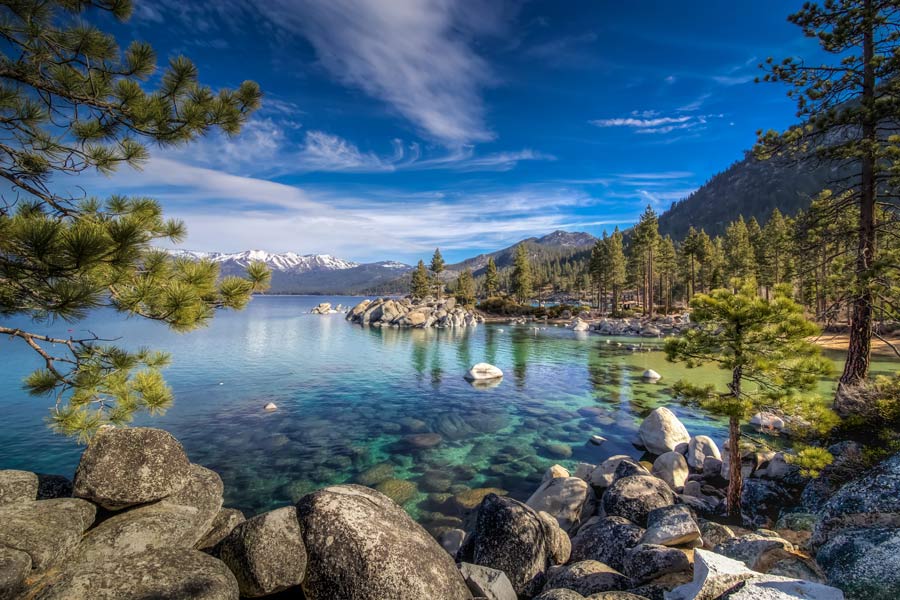
Waiting out winter: how (lesser known) animals survive Tahoe’s snow season

LAKE TAHOE, Calif./Nev. – As snow settles on the ground and temperatures drop, it’s easy to think most animals are doing what plenty of people do—curling up somewhere warm and waiting out the freeze.
While it’s a fun fact that Tahoe bears rarely go into full hibernation (with human sources of food around, there’s not much need to), plenty of other creatures in the region spend their winters stockpiling, swimming or staving off the cold in other ways, and researchers at the University of Nevada, Reno (UNR) spend their time studying them.
Seedy business
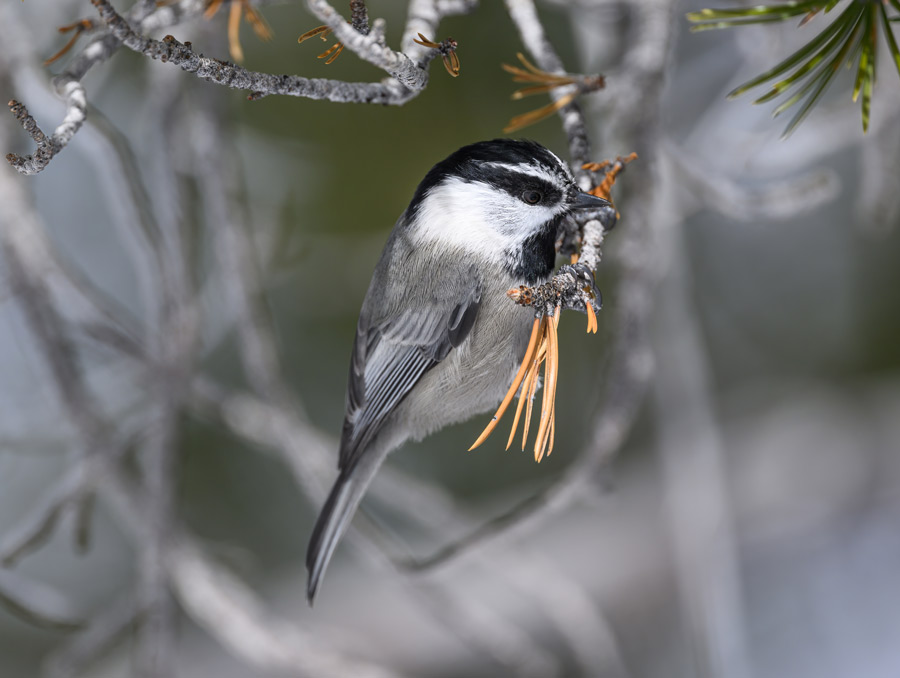
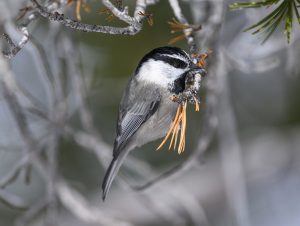
Chickadee Ridge is a popular tourist spot near Mount Rose, where the little grey birds flock to forage seeds out of people’s hands. But for their diminutive size, chickadees have a big memory.
According to researcher Vladimir Pravosudov, mountain chickadees are in a constant state of feeding, rapidly gaining and losing fat every day. But to prepare for scarce food sources in winter, they store seeds to find and eat later, a behavior known as caching.
These birds will cache thousands of seeds anywhere they can put them: among lichens, in a gap in the tree bark, up in the branches—anywhere above the snowline, scattered so they’re harder to steal from. Then they memorize each of these locations for reliable food after blizzards leave the rest of the landscape bare.
A chickadee brain is the size of about two cashew nuts, and it’s able to retain where each cache is, making it possible for the birds to survive the winter. “They’re very clever creatures. They learn quickly, and some birds we have in Tahoe are 9-10 years old,” said Pravosudov. The average chickadee lives for only 2-3 years.
Other birds have the ability to migrate down the mountain to warmer climes, especially the larger ones. Pravosudov says smaller birds like chickadees typically stay at elevation. However, one subspecies of sparrow can be seen in winter, but is actually migrating too—the white-crowned sparrows here migrate to Mexico, but a population that lives in Canada and Alaska overwinters in Tahoe.
Tiny birds have another amazing ability to endure the bitter cold. First, they fluff up, which insulates them in the same way a down-filled sleeping bag would. Then, they tuck their beaks into their shoulders, helping them to retain the heat of their breath.
Lastly, if needed, they can enter a state of hypothermia. By dropping their body temperature a few degrees, their metabolic rates slow down, which makes them more energy efficient. Especially if food was particularly scarce, going into this state overnight can get a bird to morning, where they can hopefully scrounge up more food.
Pravosudov spends much of his winters seeing what birds do up in Sagehen Forest near Truckee, though he often stops by Incline Village. One thing he’s interested in learning more about is where precisely these birds go during blizzards.
“Birds can often sense the environmental change before a storm comes, and there are areas where wind may be less harsh or could be protected from the snow,” said Pravosudov. “Where are these refuges for birds and how are they moving to them? That’s something interesting to study.”
Sneezing snakes
Believe it or not, snakes can catch colds, just like people do. And while humans might get a fever, which kills the bacteria or viruses causing illness, snakes will try to raise their body temperature by basking longer to help their immune system.
For ectothermic animals (sometimes called “cold-blooded”) like reptiles and amphibians, keeping warm during the winter is an all-important task. To stave off the cold, snakes will eat plenty of food in the fall, then start to find hibernacula—the scientific term for winter shelters.
Biologist Chris Feldman says they prefer rocky crevices along hillsides where the snow can’t penetrate, and the soil stays relatively warm. Rodent burrows are another option, which might be abandoned or vacated after a snake has another meal.
While scientists used to call the process “brumation”, more recent research shows that reptiles undergo the same processes that mammals do during hibernation. The mountain yellow-legged frog hibernates underwater in the mud—they can depress their metabolic rate so low that they respire through their skin. “They only have a heartbeat every few minutes,” said Feldman.
Even though there are several snake species in the Tahoe Basin, they don’t discriminate when it comes to nesting together. “Touching another reptile is warmer than just touching the soil or a rock,” said Feldman. “They’re seeking out thermal refuge, so whatever they can do to keep warm, they’ll do.”
As they enter hibernation, these snakes don’t eat or drink. Their organs and muscles may even shrink. Then, like many animals, they awaken after exposure to light (called a photoperiod) and warmer temperatures. Salamanders in the area are particularly cold-tolerant and might even emerge during the early spring season.
Though snake metabolism is much slower during hibernation, the chemical processes that ensure that their last big meal doesn’t rot in their stomach is something Feldman thinks is worth studying.
“There’s a lot to learn under the hood. They might be making novel proteins or new adaptations,” said Feldman. “We are trying better to understand these genetic and protein components now that we have the scientific advancements to research them.”
Freezing bees
You might shiver in the cold, and bumblebees do too—their fuzzy bodies and ability to rapidly vibrate their wing muscles to “shiver” makes them more cold-tolerant than many other insects.
Several kinds of bumblebee live in the Tahoe region, and keeping their species alive means making sure their queens survive the winter. Unlike honeybees, there are no food stores for them to subsist on, meaning that workers and the old queen only live for a year.
Instead, a new queen is born before winter and hibernates through the cold season in nooks or crannies before awakening and finding a new site in the spring. But, says scientist Anne Leonard, it’s extremely hard to track queens. They actually use a citizen science initiative called Queen Quest to help spot where they are and where they’re headed.
Queens are usually tucked away under the snow, and research has shown that they aren’t just cold-tolerant, they’re flood-tolerant. When put underwater during hibernation, they’re fine even after being submerged for a whole week.
They also have their own preferences for where they settle down. One study shows that queens prefer to overwinter in fungicide-treated soil, which prevents fungal growth while they lay still—a major danger for insects. Still, Leonard says, there could be other health effects.
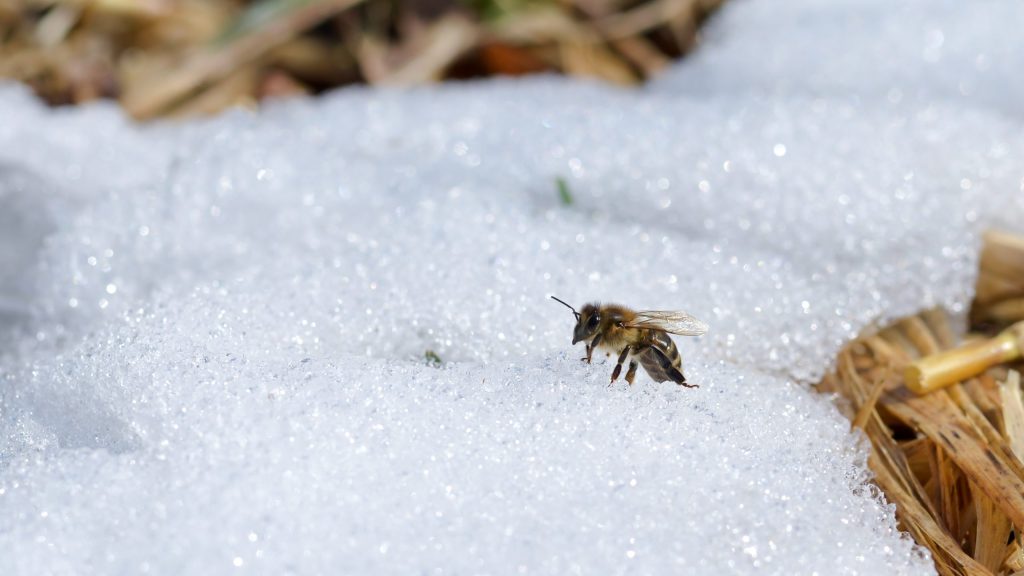
Honeybees in the Tahoe region also worry about mold and mildew, not just for themselves, but for their food stores. Bees in the region usually lay their eggs and have them overwinter with a snack of honey for when they hatch. But if mold gets to it, it won’t just spoil the food, it’ll kill the baby bee.
To prevent this, honeybees use the Lactobacillus bacteria to ferment their honey, sort of like making kimchi or sauerkraut. Fermentation has long been used to store food, so it’s fascinating to see insects do it too. Plus, bees use another bacteria as an antifungal—a unique strain of Streptomyces, which are associated with a myriad of antibiotics that humans use.
But what about other pollinators in the region? Chris Halsch, butterfly researcher, says that 80 to 90% of butterflies in the Sierra spend their winter here. They might overwinter as eggs, caterpillars or adult butterflies, entering a form of stasis called diapause. This process stops insects at a certain life stage and can be triggered by temperature and light among other factors.
Sometimes, adult butterflies flock together and try to avoid freezing. Caterpillars will eat plenty of food to ensure their survival when plants are scarce, then burrow into the soil to wait for spring—sometimes staying in their caterpillar mode for up to a year. The snowfall, which insulates them, is critical. A good snowpack doesn’t just mean great winter sports, it also means more butterflies are likely to emerge.
Most butterflies lay adhesive eggs, which will stick to a plant. That way, when their young hatch, they’ll be on top of their preferred food source. But Anna’s blue butterflies lay their eggs in a different way when in high altitudes.
At high elevation, their eggs aren’t sticky at all, meaning they typically fall into the dirt. Halsch suspects this adaptation allows the eggs to survive in the soil, like the caterpillars do. He’s curious about how these highly seasonal animals might be affected by changes in the weather.
Polar plunge
While Tahoe’s depths are icy at best in the summer, they’re downright freezing in the winter—though never enough to form a layer of ice. But under the surface, fish aren’t too susceptible to the chill.
The Kokanee salmon, which aren’t native to the area, start spawning through the fall and even into the winter—their stunning red colors can be seen en masse at spots like Taylor Creek. Other fish start spawning too, though not quite as visibly. They’re usually at the bottom of the lake, creating spawning mounds that will become their eggs’ nests.
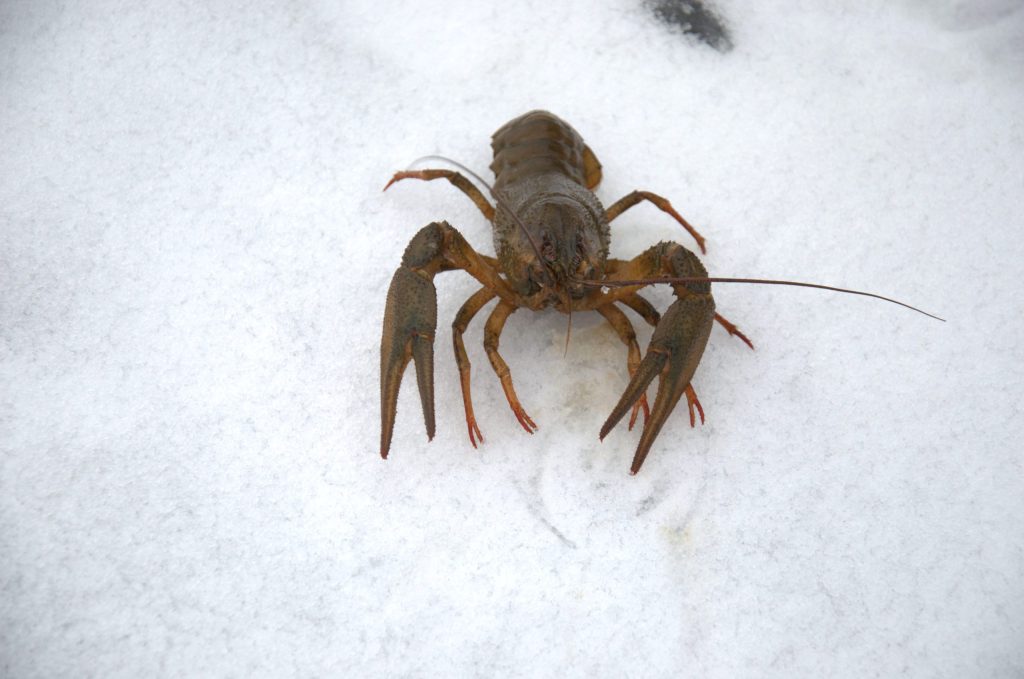
Cold waters like Lake Tahoe’s are preferred by native fish like the Lahontan cutthroat trout. But even invasives like the signal crayfish also enjoy the water, which is about 40 degrees Fahrenheit at the surface in winter.
Crayfish have a habit of eating plenty of algae and migrating up and down the water column. But they also will eat the nesting places of one of the animals that Sudeep Chandra, lake scientist (or limnologist), finds the most fascinating—the Tahoe stonefly.
This unique wingless stonefly is only found in Lake Tahoe and lives its entire life underwater, staying primarily in deep water plant beds that can be as deep as 200 feet below the surface. They have two seasonal breeding cycles, one in autumn and one in spring.
In the autumn, the stonefly will release its young as eggs onto the surrounding plants, which will hatch in the winter and feed over the course of the seasons. In spring, stonefly moms will keep their young in their body, even shoving them up into their head, then release them as live young.
“The fact that there’s life underwater in Tahoe in the winter is just amazing,” said Chandra. But he’s concerned about the many invasive species bullying and displacing the native ones, which may not be able to compete, especially as climate change makes even the deeper parts of the lake get hotter.
“It makes my heart sink knowing that these species might not be there, especially as temperatures warm,” he said. Chandra continues to advocate for protecting these endemic species and raising awareness that critical issues like lake clarity are affected by these animals. “It really can be affected by the biology at the bottom.”
Seasonal shifts
Shifts in snowpack, temperatures and climate could be impacting these animals in greater ways than we can observe. Ambient nighttime temperatures are starting to warm in the winter, which means there’s no getting out of the heat. Hotter temperatures mean less snow, more invasive species and shorter winters. And when animals emerge earlier than expected, when food sources are still not particularly plentiful, they struggle at best and starve at worst.
Still, not all hope is lost. Some animals are finding new strategies or adaptations to survive the changing climate. And making commitments to the environment like reducing food waste, taking alternative transit and choosing clean energy can have an impact to slow warming temperatures in the Sierras, helping these amazing animals continue to survive and thrive.
Editor’s note: This article originally appeared in the Winter 2025/26 edition of Tahoe Magazine.
Eli Ramos is a reporter for Tahoe Daily Tribune. They are part of the 2024–26 cohort of California Local News Fellows through UC Berkeley.


Support Local Journalism
Support Local Journalism
Readers around the Lake Tahoe Basin and beyond make the Tahoe Tribune's work possible. Your financial contribution supports our efforts to deliver quality, locally relevant journalism.
Now more than ever, your support is critical to help us keep our community informed about the evolving coronavirus pandemic and the impact it is having locally. Every contribution, however large or small, will make a difference.
Your donation will help us continue to cover COVID-19 and our other vital local news.