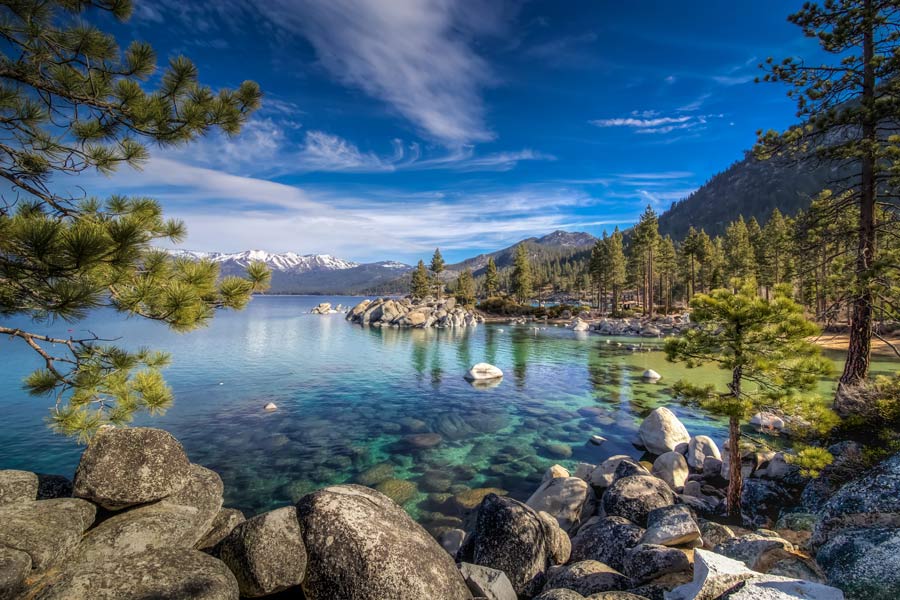
‘We’re all hands on deck’: Caltrans Avalanche Team and stopping avalanches before they happen

SOUTH LAKE TAHOE, Calif. – How do you stop an avalanche from racing down a hill? It’s something the Caltrans Avalanche Team has to contend with year-round, not just when it snows. To keep the roads open, the team forecasts avalanches and clears them from roads—sometimes using explosives to trigger smaller slides.
“Our jobs are more complicated than just pushing a button—there’s a lot more to it than meets the eye,” said area superintendent Jason McDonald. “And when the time comes, we can’t just do broad area forecasts. We have to know where an avalanche is, when it’ll come down and how to make sure people can still travel safely when it happens.”
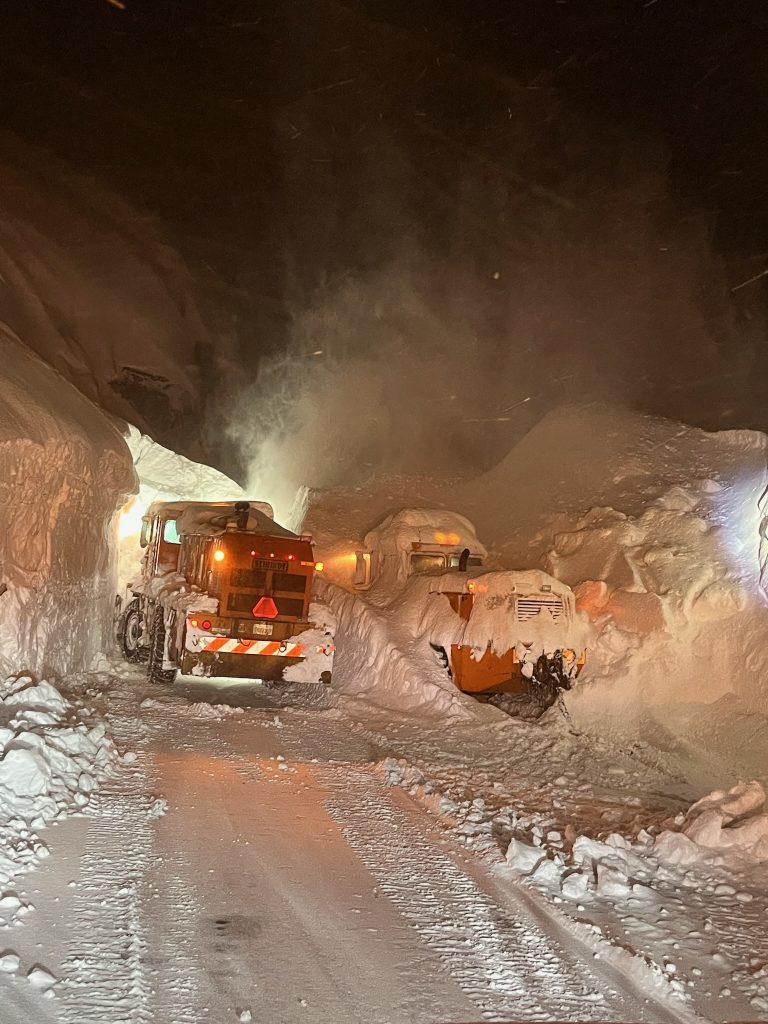
Caltrans has avalanche mitigation teams stationed all throughout the state. District 3 covers the counties of Butte, Colusa, El Dorado, Glenn, Nevada, Placer, Sacramento, Sierra, Sutter, Yolo and Yuba. The local avalanche team is stationed in South Lake Tahoe, where they carefully monitor the snow levels and conditions to track where they may need to handle avalanches.
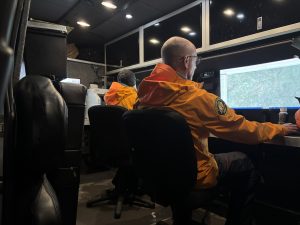
Rob Bickor works as the team’s forecaster and says it’s all about timing. “We’re trying to get an idea of when a closure might be needed. We might even be thinking about forecasting in the summer, observing things like burn scars or slide zones that we need to pay attention to when the snow comes.”
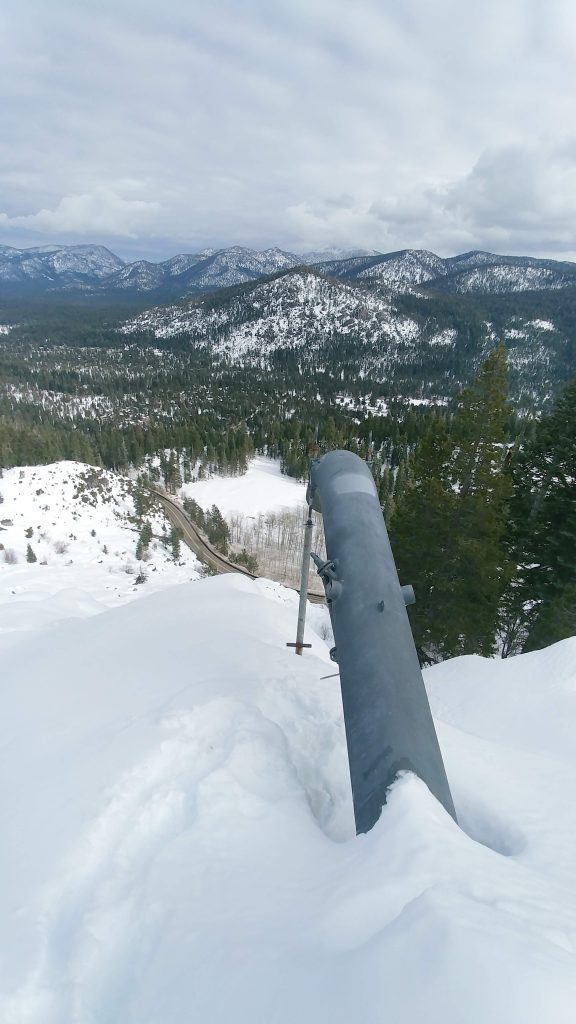
A stake on Echo Summit is used to monitor snow levels on a regular basis, but they also need to pay attention to windshield factor, weather forecasts from partners in the area as well as conditions on the day that an avalanche might come down. “Our schedules are built by Mother Nature,” said McDonald. “There’s a real level of unpredictability that comes with this job.”
Billy Newman, who is serving as the statewide winter operations coordinator, said the northern districts are very experienced overall. “There’s an internal knowledge that we have. We can take on a lot of snow, and with the knowledge spread through the three districts that cover this area, actually perform avalanche control.”
But what tools does the team actually use? While they have some remote sensing tools to help with forecasts, ultimately triggering or breaking up an avalanche requires heavy hitters.
Explosives have been in use in the Sierra Nevada for a long time—the National Guard used to help until Caltrans procured their own artillery in the early 1960s. By the nineties, Caltrans had switched to the Gazex system, pneumatic cannons stationed along Highway 50.
These cannons are remotely deployed by trained blast technicians. And Caltrans isn’t the only one who uses them—ski resorts also utilize their own cannons to break up avalanches. With a controlled blast, they can get the snow off the road within an hour and get traffic moving again.
If the cannons can’t be deployed, the team can also use a pneumatic LoCAT, which functions similarly: it fires a projectile into the mountain to trigger a slide. The team also still has hand charges that they deploy manually and is currently using a Caltrans pilot program called Daisy Bell—which literally looks like a huge bell. It’s deployed from a helicopter and is useful for years that have unusual accumulation of snow, but can only be flown out once the snow’s done coming down.
“We’re training people not to push a button, we’re training to know when and what to do with those results,” said Newman. “Having that knowledge of our mountain and putting it all together, knowing when to initiate—that’s what matters.”
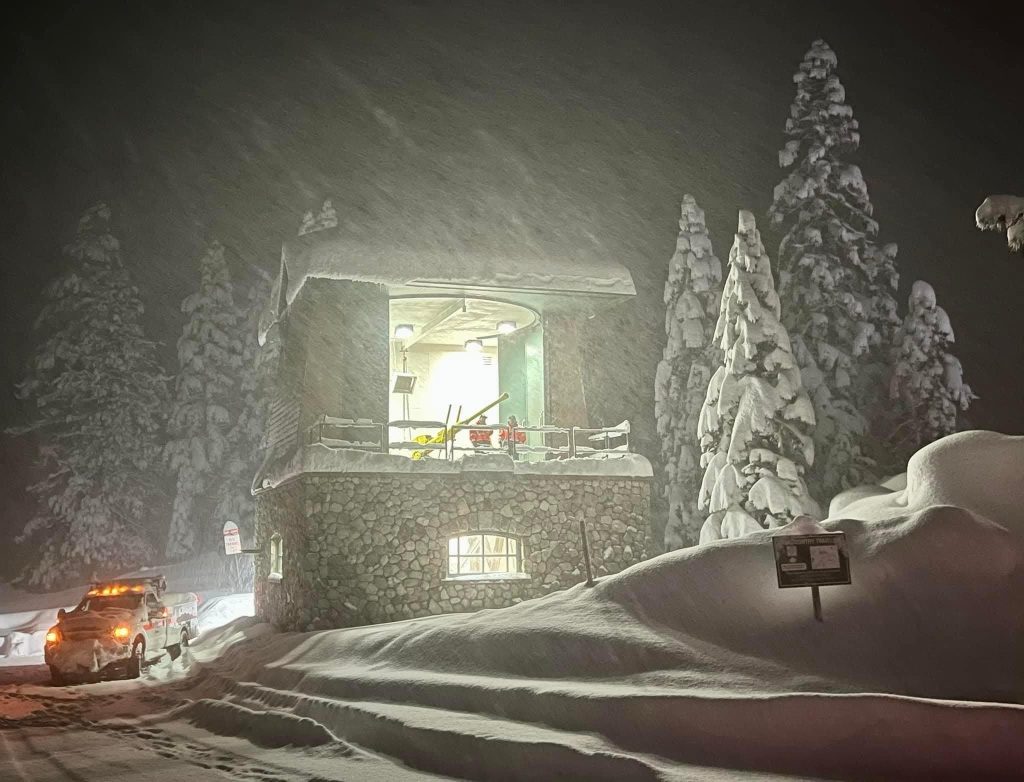
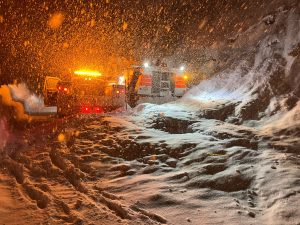
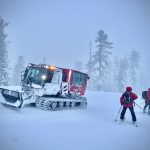
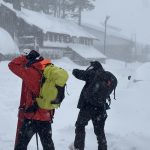
The team is working in tough conditions—they sometimes have to hike up to a site while the snow is coming down in order to deploy hand charges. To ensure that the public can continue to travel, they often try to trigger avalanches outside peak traffic hours, which can sometimes mean they’re working late into the night or early in the morning.
In contrast to work on the main roads, along parts of Emerald Bay, it’s impossible to deploy the cannons because of the landscape. The naturally occurring slides there are a testament to the forecasting work that allows Caltrans to keep traffic flowing when they trigger smaller avalanches.
“Natural slides can bring down material, trees, rocks. It can go through guard rails,” said McDonald. “We can’t do any control out there, so that’s why we proactively close the roads to mitigate it.” Afterwards, teams still have to brave the snow and dig pits to test the reactivity and see if it’s safe to open the roads back up.
Even after what’s traditionally considered “avalanche season,” the team still stays alert. Matt Loescher, acting supervisor, noted that when the weather warms up, it can actually trigger more slides into the roads, including rock slides. They also pointed out that fires can cause slides as well—they added two new slide areas to monitor after the Caldor Fire.
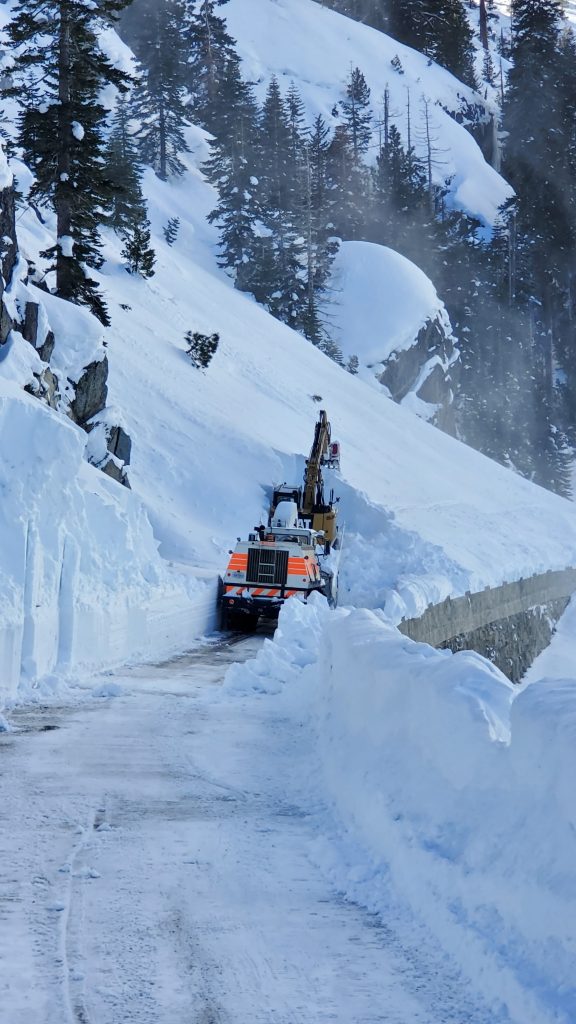
“Travelling in the winter is very dangerous. We’re in a little box with our radio and our heater on, and when you get from Point A to Point B without incident, we get used to that,” said Newman. “People often have no idea about everything that these teams have gone through for the past few hours to get them in or out of town. We’re out working 24 hours a day to make sure that people, commerce and things like medical supplies can come up and down the mountain.”
To stay up to date with Caltrans road closures, you can listen to 1610 AM or use QuickMap, the app that notifies you of routes and closures. While it can be tempting to go off route to avoid a closure, keep in mind that Caltrans only plows state highways and does not service backroads, county property or city property, so alternate routes may be closed during heavy snow.
Eli Ramos is a reporter for Tahoe Daily Tribune. They are part of the 2024–26 cohort of California Local News Fellows through UC Berkeley.



Support Local Journalism
Support Local Journalism
Readers around the Lake Tahoe Basin and beyond make the Tahoe Tribune's work possible. Your financial contribution supports our efforts to deliver quality, locally relevant journalism.
Now more than ever, your support is critical to help us keep our community informed about the evolving coronavirus pandemic and the impact it is having locally. Every contribution, however large or small, will make a difference.
Your donation will help us continue to cover COVID-19 and our other vital local news.