Taking Tahoe to 29K feet: Jim Morrison’s Everest accomplishment and his Tahoe team

Provided / Christian Pondella
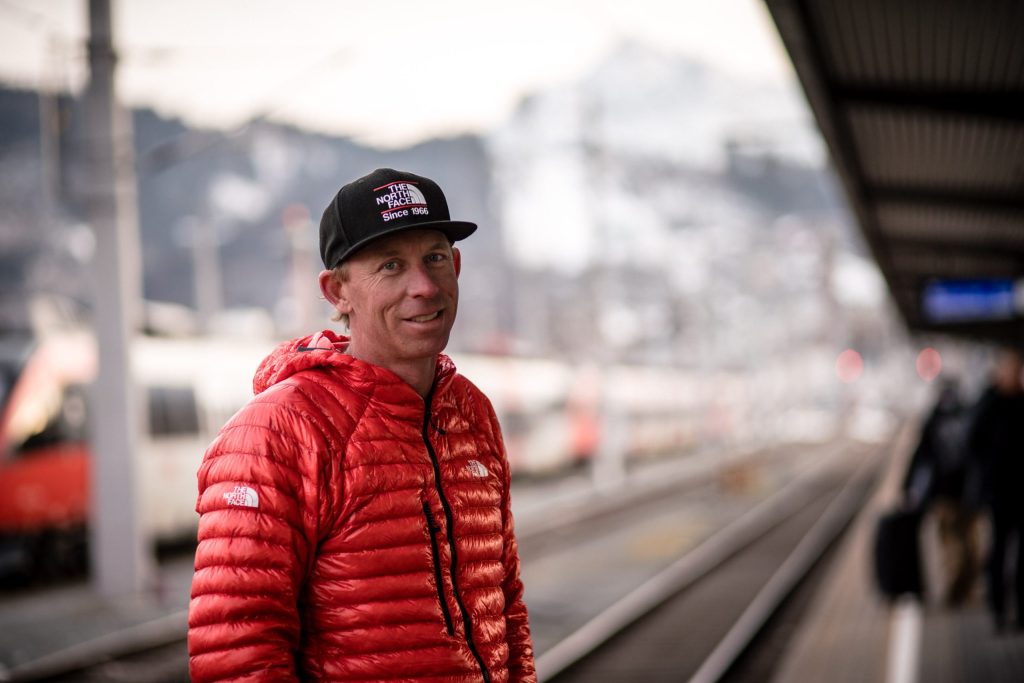
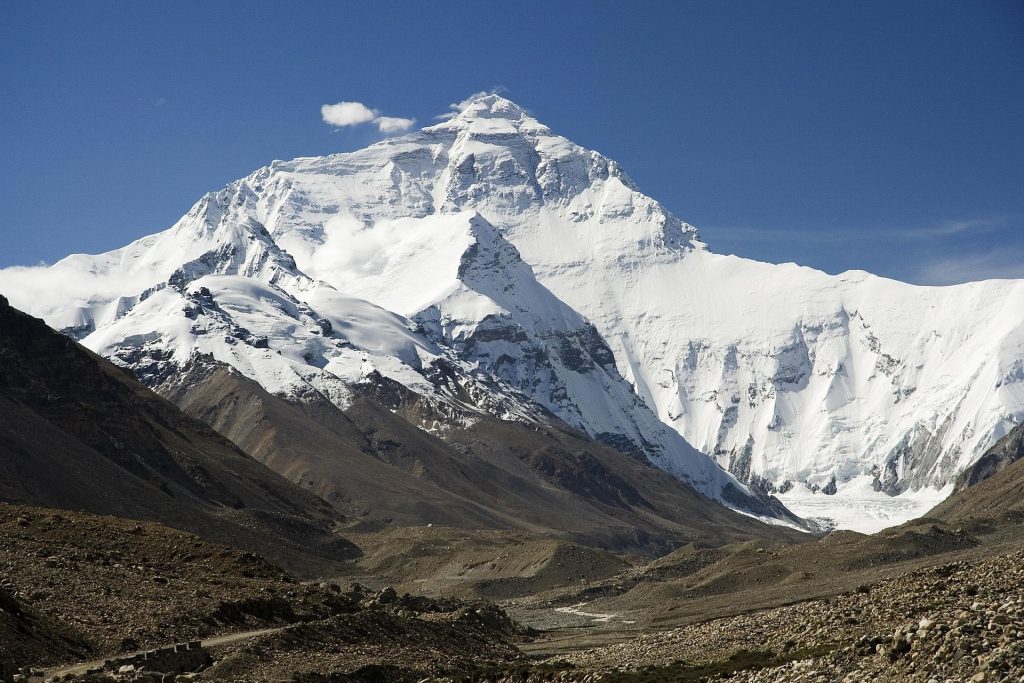
TIBET, China – Tahoe’s own Jim Morrison is the feature of an upcoming National Geographic documentary, capturing his Oct. 15 accomplishment on Mount Everest’s (29,032 ft.) North Face. The date marks the day he carved his name in history as the first to ski what has been considered the mountain’s most daunting line, the Hornbein Couloir.
“For two years everyone looked at the face and was like, are you crazy?” Morrison told National Geographic.
Incredibly steep, with sections between 45 and 60 degrees, and essentially running vertically down, the Hornbein Couloir is an extreme risk for falls and avalanches.
The narrow chute, in some sections just five feet wide, offers no escape routes, meaning a fall would most likely be fatal.
It has proven so for those who have attempted it before.
In 2002, it claimed the life of French snowboarder Marco Siffredi who was never seen again after he dropped into the descent. His body still hasn’t been found.
Starting at an altitude close to 29,000, oxygen deprivation compounds the couloir’s already physical demand.
In a suspenseful four hours and five minutes, Morrison descended down the never-before-skied line, connecting it with the Japanese Couloir in a linkage known as The Super Direct as it’s the most direct line off the mountain. He rounded out the accomplishment skiing down to the Rongbuk Glacier, where his base camp was located.
Morrison describes the 9,000 vertical feet as “Steep, firm, unrelenting, beautiful.”
His accomplishment has tallied six years, two failed attempts and nights spent in a hypoxic tent to simulate the high altitude.
Permitting issues foiled Morrison’s first attempt in 2023. An injury waylaid his 2024 attempt when an avalanche took out a rope fixing team member, breaking his femur.
Down, but not out, Morrison persevered for this third attempt despite having a knee surgery just months before.
Morrison handpicked a supporting team for the ascent to 29,032 feet, including members with Lake Tahoe roots.
Among them was Adrian Ballinger, founder of the Tahoe-based mountaineering guide company, Alpenglow Expeditions, who is reported to have organized fixing and outfitting.
Ballinger himself has an impressive mountaineering resume, summiting Everest without supplemental oxygen, and is the only American to have accomplished four complete ski descents of 8000-meter peaks, including the first ski descents of Makalu, the 5th tallest mountain in the world, and Manaslu, the 8th tallest.
Founding Alpenglow Expeditions in 2004, Ballinger then developed an innovative mountaineering climbing style in 2011, known as the Rapid Ascent System, which he has commercialized to mountains around the world.
Operating out Olympic Valley, Calif., Alpenglow Expeditions has amassed over two decades of explorations and summits around the world, sourcing highly skilled and experienced guides.
One of those is Ecuadorian Esteban “Topo” Mena, who anchored the climbing portion of the Morrison’s Everest expedition. In his prior mountaineering exploits Mena became the youngest non-Sherpa to summit Everest without oxygen at 23 years old, and that was on his first attempt.
The years of Morrison’s dedication, persistence and all the teamwork coalesced the morning of Oct. 15 at 6 a.m., when the 12 person company started the steep climb up, just one day before their permits expired. Taking advantage of a narrow weather window, the determined dozen arrived at the top at 12:45 p.m. Together they comprise just the sixth expedition to ascend the Hornbein Couloir.
Morrison began his history making descent around 2 p.m.
“It was a mix of survival skiing and actual shredding,” said Morrison in a National Geographic interview. “Some sections were smooth enough for real turns. Others were rutted and raised four feet up and down, like frozen waves.”
The journey up and down was not only physical for Morrison, but emotional, shedding tears at one point during the descent.
“I’d risked so much, but I was alive. It felt like a tribute to Hilaree—something she’d be proud of. I really felt her with me, cheering me on,” he told National Geographic, discussing his late partner, Hilaree Nelson.
Nelson died in a fall three years ago near the summit of Manaslu on a ski mountaineering expedition the two were on.
The Everest mission was something the two had been working towards together. Morrison spread her ashes on the summit of Everest and dedicated the day to her.
He is no stranger to loss.
In 2011 Morrison lost his wife, Katie Morrison and two young children, Wyatt and Hannah, in a plane crash. Katie was flying the couple’s plane when she hit rough weather on the way to Las Vegas.
She was deeply involved in the Truckee Tahoe Airport community, serving on the board as well as other committees and the region’s Ninety Nines Chapter, an organization that advances female aviation.
In his National Geographic interview, Morrison attributed his resilience to Eckhart Tolle’s book, The Power of Now, overcoming the past by learning to exist in the moment.
Oscar winning filmmakers, Chai Vasarhelyi and Jimmy Chin, the makers of Free Solo, captured Morrison’s monumental undertaking and groundbreaking achievement. The National Geographic documentary is currently in production.
When not conquering mountains, Morrison is a residential general contractor who has built numerous high-end homes in the Tahoe Basin.
His Everest expedition has caused a stir among the Tahoe community.
In honor of his accomplishment, The Tahoe Art Haus in Tahoe City is screening a double feature of two North Face films: Trango and Lhotse on Nov. 16. The films cover Nelson and Morrison’s Lhotse expedition and Morrison’s Great Trango Tower expedition following Nelson’s death.
In a post recounting the Everest experience, Morrison said he felt close to the edge of the netherworld.
“Now we’re back on earth in physical form, but forever changed,” he said, “by what it took to send and return.”




Support Local Journalism
Support Local Journalism
Readers around the Lake Tahoe Basin and beyond make the Tahoe Tribune's work possible. Your financial contribution supports our efforts to deliver quality, locally relevant journalism.
Now more than ever, your support is critical to help us keep our community informed about the evolving coronavirus pandemic and the impact it is having locally. Every contribution, however large or small, will make a difference.
Your donation will help us continue to cover COVID-19 and our other vital local news.