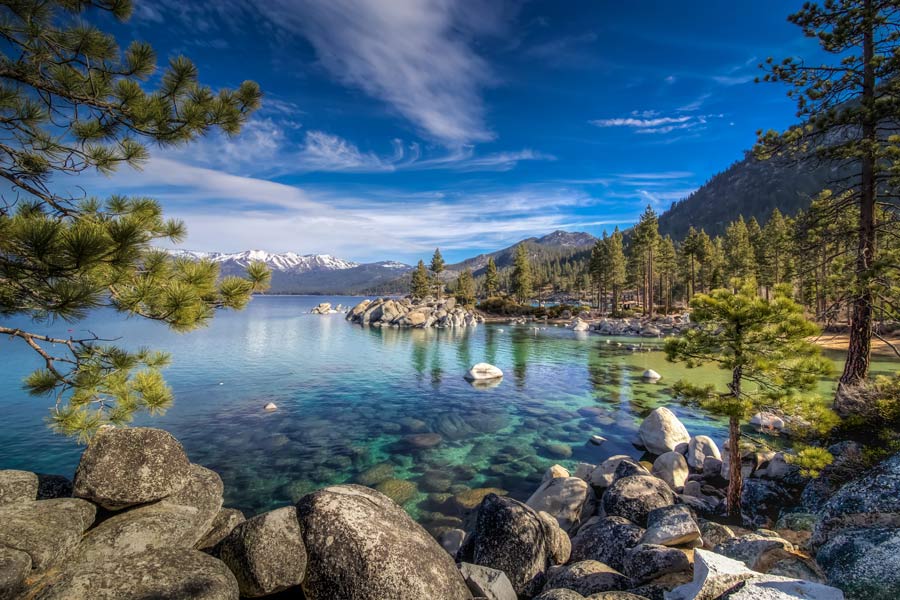
Thousands of native Lahontan cutthroat trout released into Lake Tahoe in historic partnership
MEEKS BAY, Calif. — Thousands of Lahontan cutthroat trout were released into Lake Tahoe at Meeks Bay on Tuesday in a milestone effort to restore the lake’s only native trout species, marking the first time the Washoe Tribe’s Environmental Protection Department and the U.S. Fish and Wildlife Service have partnered on a cutthroat trout release in the Tahoe Basin.
Lahontan cutthroat trout are the only trout species native to Lake Tahoe. Once abundant throughout the basin, their populations collapsed following European settlement due to overfishing, habitat loss and the introduction of non-native fish. Today, cutthroat trout are listed as a threatened species under the federal Endangered Species Act.
“Before contact with European settlers, Lake Tahoe was the main home for Lahontan cutthroat trout,” said Kristina Burnette, environmental manager for the Washoe Tribe. “It is the only native trout species in Lake Tahoe, and when they were largely wiped out after contact, it had a significant impact. Recovery of Lahontan cutthroat trout is important because they were a stable food source when our people came to the basin during the summer months.”
For the Washoe Tribe, the restoration represents the return of a traditional food source that sustained tribal members for generations before European contact.
“They are culturally significant to our people, so we want to restore them back into the Tahoe Basin.” said Cale Pete, environmental director of the Washoe Environmental Protection Department.
The release also complements the tribe’s ongoing restoration work in the Meeks Creek watershed.
Across the highway from Tuesday’s release site, the Washoe Tribe is leading the 283-acre Meeks Meadow restoration project on U.S. Forest Service land. The project aims to restore meadow habitat, improve stream function and increase the abundance of culturally significant native plants.
“The project is under the Washoe Tribe, and it’s unique because it’s not tribal land — it’s Forest Service land,” Pete said. “The Washoe Tribe is spearheading the project to increase the density and frequency of culturally significant plants. We’ve had great collaboration with the Lake Tahoe Basin Management Unit, our tribal elders, tribal youth, tribal administration and the California Tahoe Conservancy.”
For tribal leaders, Tuesday’s release represented both an ecological milestone and a cultural homecoming.
“This is a monumental event toward recovery and reconnection for the tribe,” Burnette said.
-
Cale Pete, environmental director for the Washoe Environmental Protection Department.
Petra Molina / Sierra Sun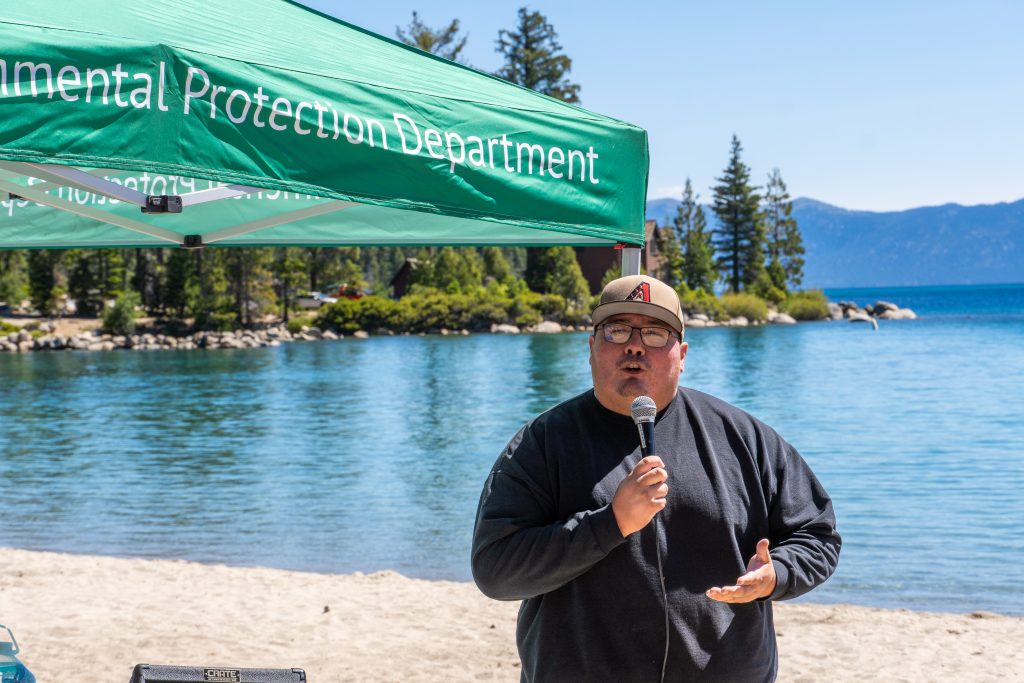
-
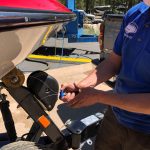
Members of the public and the Washoe Tribe released 25 Lahontan cutthroat trout into Lake Tahoe by hand using buckets, while more than 1,000 additional fish were released from a stocking truck.
Petra Molina / Sierra Sun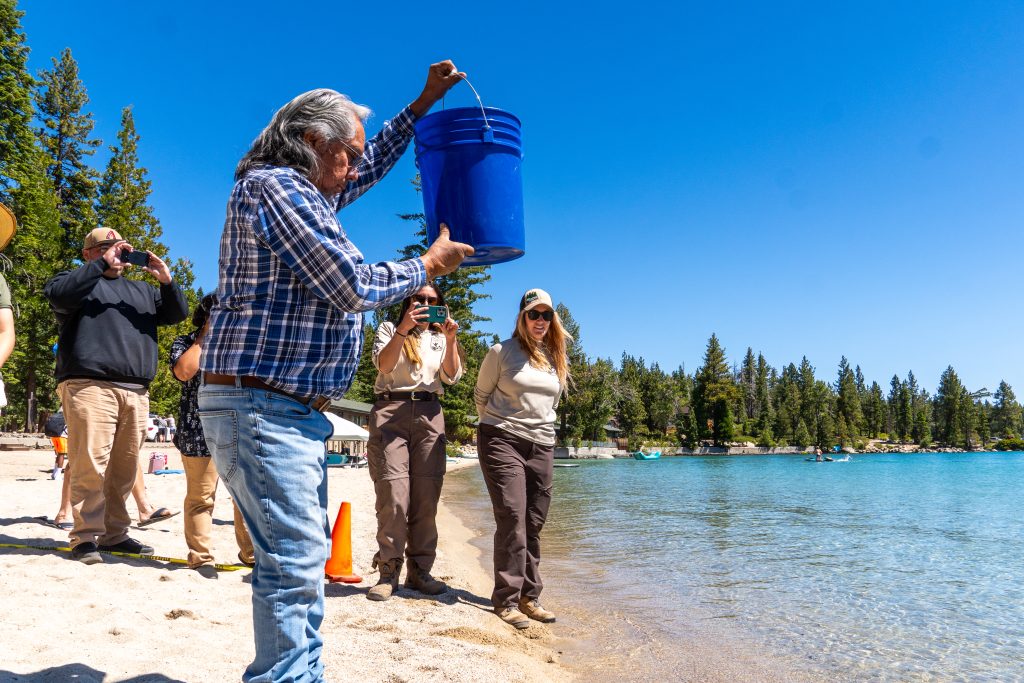
-
Members of the public and the Washoe Tribe released 25 Lahontan cutthroat trout into Lake Tahoe by hand using buckets, while more than 1,000 additional fish were released from a stocking truck.
Petra Molina / Sierra Sun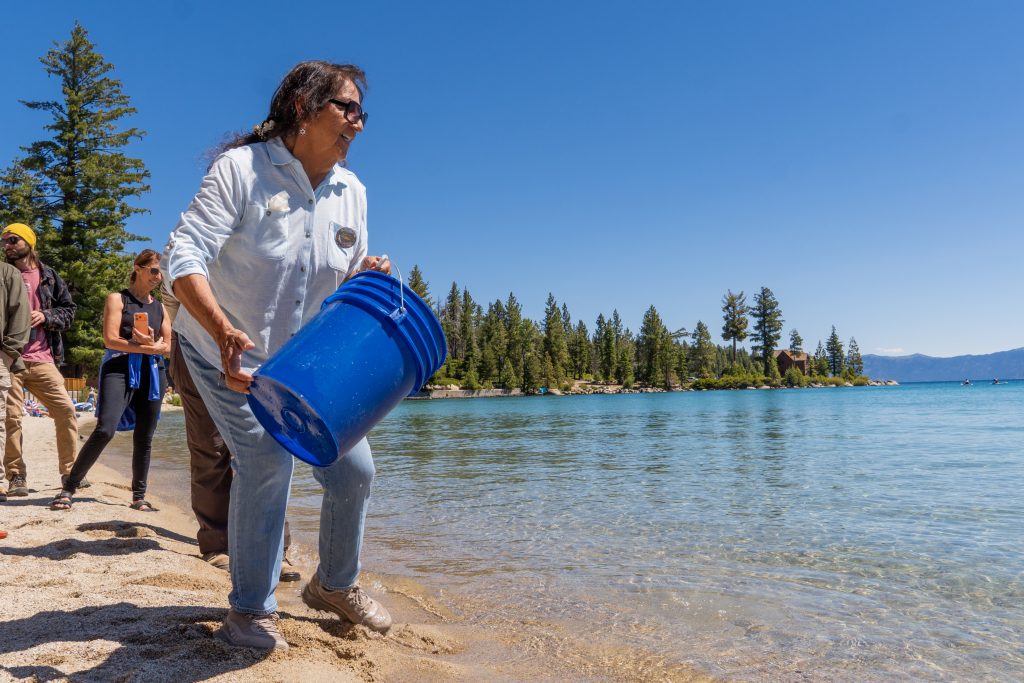
-
-
Members of the public and the Washoe Tribe released 25 Lahontan cutthroat trout into Lake Tahoe by hand using buckets, while more than 1,000 additional fish were released from a stocking truck.
Petra Molina / Sierra Sun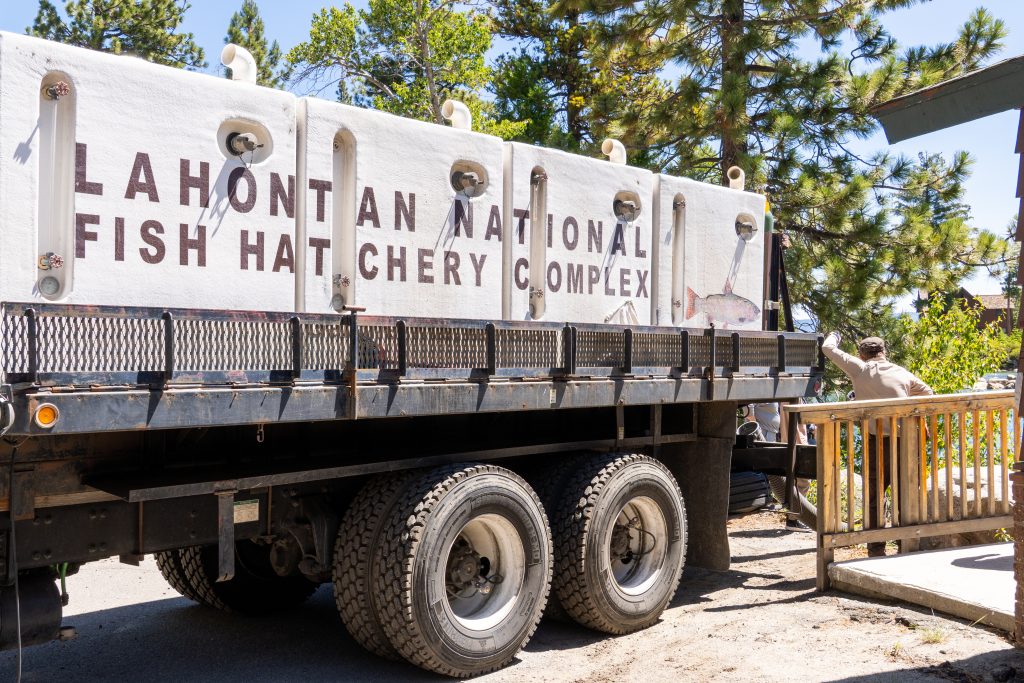
-
Members of the public and the Washoe Tribe released 25 Lahontan cutthroat trout into Lake Tahoe by hand using buckets, while more than 1,000 additional fish were released from a stocking truck.
Petra Molina / Sierra Sun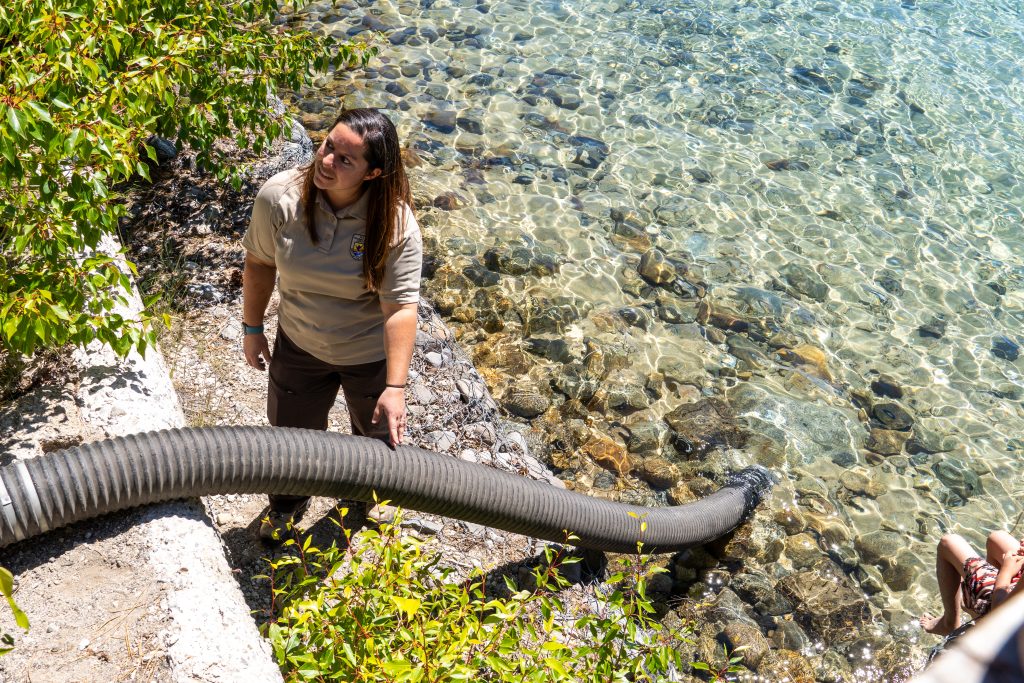
-
Lahontan Cutthroat Trout
Petra Molina / Sierra Sun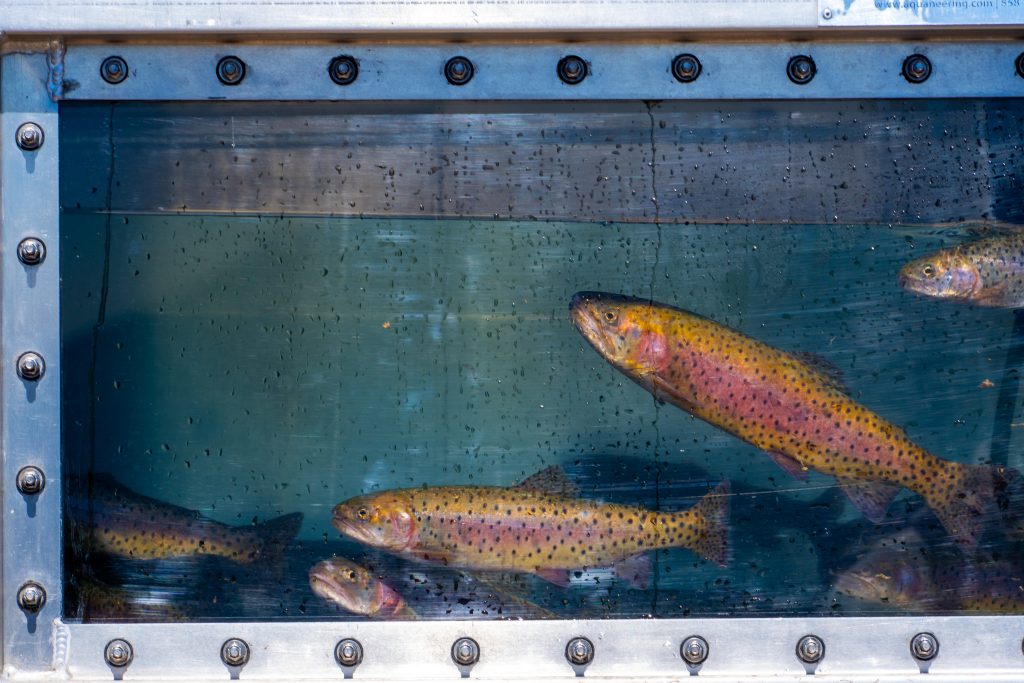








Support Local Journalism
Support Local Journalism
Readers around the Lake Tahoe Basin and beyond make the Tahoe Tribune's work possible. Your financial contribution supports our efforts to deliver quality, locally relevant journalism.
Now more than ever, your support is critical to help us keep our community informed about the evolving coronavirus pandemic and the impact it is having locally. Every contribution, however large or small, will make a difference.
Your donation will help us continue to cover COVID-19 and our other vital local news.