TRPA, economic growth and transit: city council updates

SOUTH LAKE TAHOE, Calif. – On Tuesday, city council met to receive a presentation on the Tahoe Regional Planning Agency’s (TRPA) fees, discuss the economic growth of the city and decide on funding the microtransit Lake Link, among other items.
Mayor Tamara Wallace was absent, and the meeting was run by Mayor Pro Tem Cody Bass.
Proclamation and public comment
Bass read a proclamation for Fire Prevention Week out for the public, as South Lake Tahoe Fire Rescue chief Jim Drennan was not present to receive it. It takes place from October 5 to 11 and there is a special focus on lithium-ion batteries, which are in many household electronic devices and can cause dangerous fires if not handled properly.
During public comment, Kathi Zollinger, Melissa Soderston and Erick Asbury voiced their support for the bears in town. Zollinger said that a recent incident with hazing bears caused some conflict between the BEAR League and the South Lake Tahoe Police Department (SLTPD), and suggested that they work together. Asbury said he was interested in starting a sanctuary city for the bears.
Duane Wallace of the South Tahoe Chamber of Commerce said he and the chamber urged the council to oppose Proposition 50. The proposition would redistrict California to produce more blue districts, which is in response to Texas’s redistricting to produce more red districts.
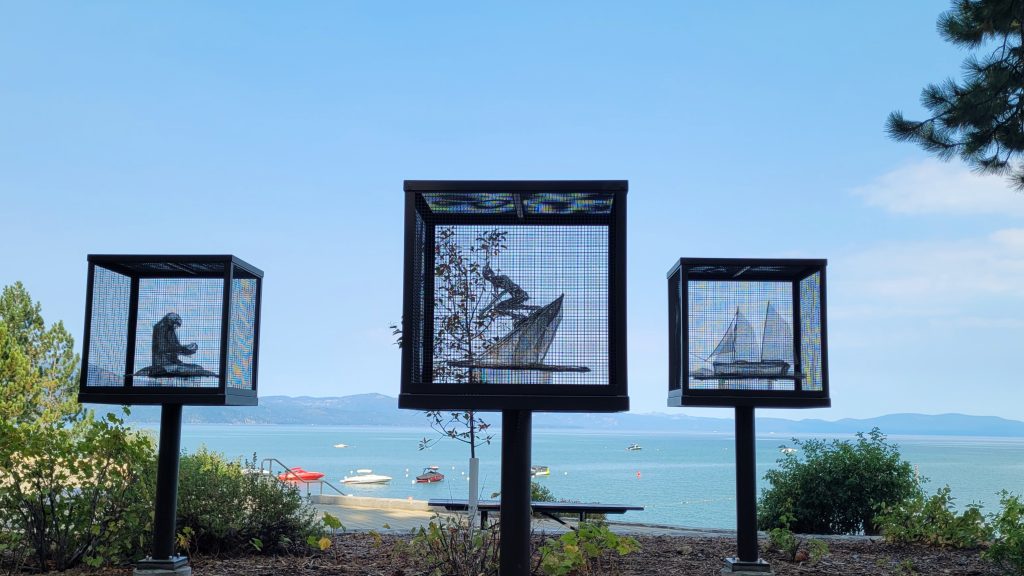
Scott Loberg opposed the recent art installation at Lakeview Commons, which features sculptures placed inside grated boxes on posts. Loberg said he considered it a misuse of the American Rescue Plan Act (ARPA) funds and said, “It’s like the world’s smallest zoo… the audacity of putting a Native American woman in a box… looks horrendous.”
Jose Perez, Angie Reagan and Dina Ramaha raised more national and global issues to the council’s attention.
Perez spoke to the recent ICE actions that have ramped up since President Trump entered office, saying that they harm the tourism-based economy of the city. “The fear created by these raids causes people to withdraw from public life… We must recognize that the people affected by these raids are not just statistics—they are our neighbors, they are parents of children who attend our schools, they are the essential employees who keep our hotels and restaurants running. They are humans who deserve to be treated with dignity and respect.”
Reagan agreed with Perez’s sentiments and said, “Too many in our city feel invisible… We are not immune to national and global struggles. We feel these struggles in South Lake Tahoe.” She urged the council to build on policies to make Tahoe a community for all.
Ramaha, who is a Palestinian American, said she was grateful to have reached out to the community for support in fundraising for people in Palestine and Gaza. She noted that she had met with a prominent Jewish member in the community to discuss anti-Semitism in the city.
“This is the future of South Lake Tahoe. …Of what importance do we have to put an end to anti-Semitism around the world? To put an end to the bombing of innocent people, men, women and children in Palestine? Who are we? But the question is actually, who are we not?” asked Ramaha. She also noted that directing tax dollars to Americans, rather than funding the military forces of other countries, would help support programs that people were concerned about in the community, such as Medicaid.
TRPA presentation
TRPA COO and deputy executive director John Hester presented to the city regarding the strategic priority and transportation fees.
Mobility mitigation fees have been a topic among councilmembers who want to incentivize more economic growth, but are hampered by upfront mitigation fees to the TRPA. Additionally, these fees are considered paid for as long as a property is redeveloped within five years of the previous development, but this disincentivizes rehabilitation of older properties.
City manager Joe Irvin and Hester noted that the TRPA cannot impose an operating tax and do not have the authority to have an annual tax assessment.
Councilmember Scott Robbins suggested that the TRPA consider spreading out the payment for these fees rather than making it an upfront cost, which would fix the issue of uneven funding across years.
Bass, who serves on the TRPA board, said that the TRPA is responsible for striking a balance between environmental and development interests, especially for a region that has many “powerful people” who want to develop in the area. “TRPA has to find that balance and it’s an incredibly difficult balance to find,” said Bass, who also noted that there are 15 people making decisions on the TRPA board.
The board noted that they would be interested in the TRPA extending credit for these fees, something Bass has advocated for.
Microtransit funding
After El Dorado County refused to fund the transit Joint Powers Authority (JPA) in South Shore, the city has been a major player in funding the South Shore Transportation Management Association (SSTMA). For the upcoming fiscal year, staff suggested that the city contribute $650,000 to help fund operations of Lake Link.
Between August 2024 and July 2025, Lake Link provided nearly 236,000 rides, with 81% of them being shared rides. There was a minor drop in their ridership, but Lake Link also directs riders to fixed route services nearby if available.
Robbins said that he considered the “feeder system” of Lake Link to the local buses a success.
Jim Marino, executive director of the Tahoe Transportation District, said he was in support of the funding from the city and considered this a “golden age of transportation.” He also noted that currently, Lake Link was funded half by public funds and half by private partnerships, though there was a lack of support for funding from El Dorado County.
Bass made a motion to execute the agreement for $650,000, and to commit an additional $200,000 for further contributions from organizations like the TRPA or El Dorado County. He also noted that the city’s contributions should be listed as local contributions to transit. The motion passed unanimously.

Development commodities
A modification to the TRPA’s development commodities owned by the city was proposed, which would allow for the transfer of development rights for commercial and industrial projects. The amendment would tie the amount of development rights available to the proposed improvement and recommend that up to 200 square feet of land coverage could be provided to projects interested in installing amenities that promote alternative transportation and walking—things like electric vehicle charging stations and bike racks.
While councilmember David Jinkens was interested in having more economic growth in the city, he also charged other counties with needing to do their part, especially with regards to housing.
Robbins said he was equally frustrated, but that the city did not have much leverage to make other counties do anything, especially about housing. Jinkens was interested in approaching state officials to request help with persuading these counties.
Bass suggested that the TRPA would be a good place to bring people to the table, as all the surrounding counties are beholden to the bistate compact that TRPA upholds. Additionally, he noted it was clear that the city had done its part in providing housing, as it received a Pro-Housing designation from the state.
The council also discussed if these incentives favored larger entities like Margaritaville rather than smaller local businesses, but also considered the matter of ROI on projects.
The motion to amend the policy passed unanimously.

Growing and diversifying the economy
Assistant city manager Hilary Roverud presented a look on the state of businesses locally. According to national community survey in 2024, 36% of respondents rated the overall economic health of South Lake Tahoe as poor, while 41% rated it as fair.
During the Business Walks last year, which were intended to reach smaller local businesses, 48% said their business was stable while 23% said it was increasing. 70.83% of respondents had a positive response.
Roverud also spoke about the improvements made to streamline the regulatory process, including working with TRPA on the mobility mitigation fee, a point person (called an ombudsman) for development, the development of the Midtown Area Plan and commodity distribution policies among others.
She added that there was praise for the many events the city has put on over the year, and that there was interest for social media campaigns to promote businesses in coordination with events on the calendar.
The city is also looking into investment incentives like the development commodities item earlier in the meeting, a façade improvement grant program and pre-development loan program.
Robbins was interested in business visitations to a diversity of local businesses, noting that Barton was a major employer of residents in the city. He also asked Roverud to provide a list of the vacant property stock in the city. Roverud mentioned that they would be expanding the visitation program to include nonprofits.
Paving priorities
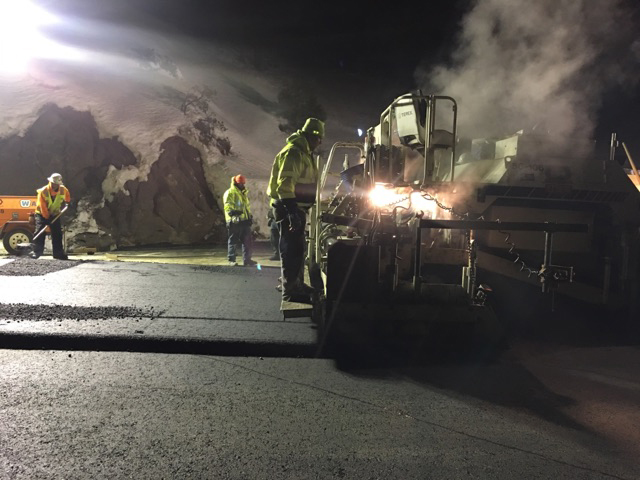
Stephen Anderjack, project manager of the public works department, asked council to help decide on what streets to pave utilizing the $3.5 million budget—the James and Eloise neighborhood streets or Johnson Boulevard.
Five factors were considered in presentation: daily traffic usage, upcoming and recent projects like electrical work, current paving conditions, grouping roads with priority if they were close together and equity in hitting different neighborhoods that need paving.
The two options were to put the full budget to the James and Eloise neighborhood or to split the budget to include paving Johnson Boulevard.
In public comment, Ed Moser said he supported option 2, as Johnson Boulevard serves the college, a bus route, the post office, shopping and law enforcement vehicles.
Loberg expressed frustration on the city’s decisions on paving roads, a longtime complaint of his. He believed that the council was wasting money and would only pave the streets of areas like Al Tahoe and the Keys, saying that he felt money went in and results didn’t come out.
Robbins was interested in paving areas that intersected with the bike path, and the council debated what streets would be the most effective use of funds.
Eventually the motion to pave Eloise, Dunlap, Johnson and potentially Patricia if there were leftover funds passed unanimously.
Councilmember reports
Irvin noted that he, Jinkens and Robbins would all be attending the Cal Cities conference in the next two weeks.
Jinkens requested an item for a future agenda for transit JPA funding accountability, as well as a future presentation from the John Stewart Company regarding local housing, as they help manage Sugar Pine Village.
Councilmember Keith Roberts indicated interest in pursuing bike path enhancements on Eloise, such as signage and planting indigenous trees. He also was interested in adding more questions for the TRPA in future meetings.
As the California Department of Fish and Wildlife will be meeting with the council in October, Robbins noted an interest in having the police and BEAR League collaborate.
The next city council meeting will take place on October 21.
Eli Ramos is a reporter for Tahoe Daily Tribune. They are part of the 2024–26 cohort of California Local News Fellows through UC Berkeley.








Support Local Journalism
Support Local Journalism
Readers around the Lake Tahoe Basin and beyond make the Tahoe Tribune's work possible. Your financial contribution supports our efforts to deliver quality, locally relevant journalism.
Now more than ever, your support is critical to help us keep our community informed about the evolving coronavirus pandemic and the impact it is having locally. Every contribution, however large or small, will make a difference.
Your donation will help us continue to cover COVID-19 and our other vital local news.