New Tahoe institute brings win-win collaborative approach to solving sustainability locally and globally

INCLINE VILLAGE, Nev. – The Tahoe Institute for Global Sustainability through the University of Nevada, Reno’s Lake Tahoe Campus is gaining momentum after its launch in early June with the goal of developing solutions to sustainability in the basin and worldwide.
“Lake Tahoe is not only the jewel of the Sierra Nevada,” said Sudeep Chandra, PhD, professor and limnologist at UNR, who has helped launch the new institute, “but it is an important marker for the globe for understanding environmental change and economic resilience.”
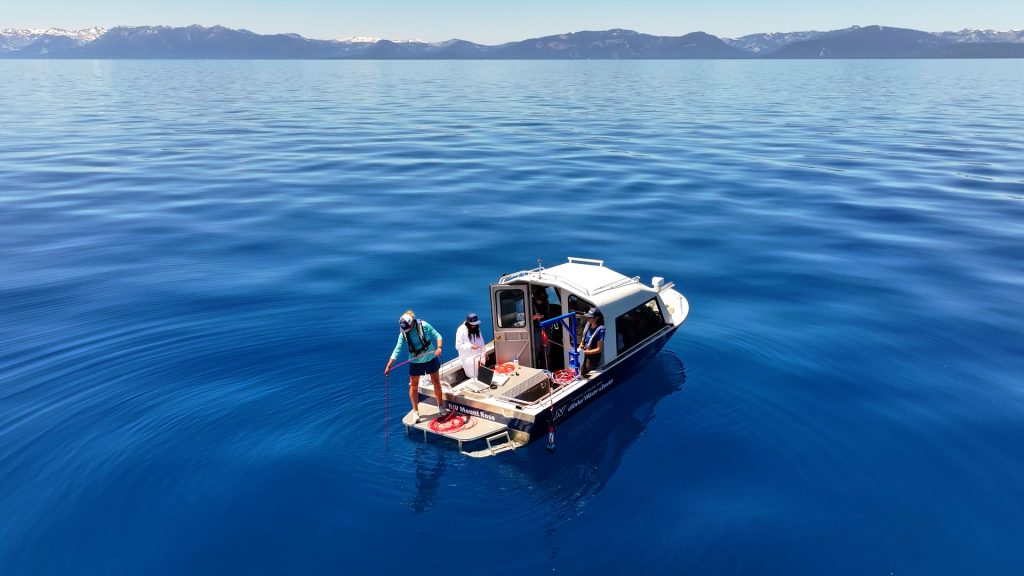
That makes Tahoe an ideal location for the institute to study and approach sustainability from many different angles and expertise areas, finding and interweaving solutions for both nature and society.
“I get excited,” Chandra says, “because it’s about supporting win-win solutions.”
To spark those win-win solutions, the institute organizes forums with professionals across many different fields and regions in a collaborative approach for high level conversations on policy, science, as well as dialogue with the general public.
A recent forum, for example, discussed accounting the natural capital of freshwater bodies.
In its Tahoe focused research, a number of institute scientists are furthering insight on clarity, wildfire effects on landscape, stream ecology and its connection to the lake’s nearshore areas.
The institute has also developed the Tahoe Environmental Observatory Network, which offers an information and interactive story-map explaining intricacies of the basins’ watershed, streams and lake. It will eventually offer real time and publicly available data from sensors placed around Lake Tahoe.
-
Taking measurements of tree trunk size is just one part of the long-term monitoring efforts going on as a part of the Tahoe Environmental Observatory Network.
Provided / Ali Dickson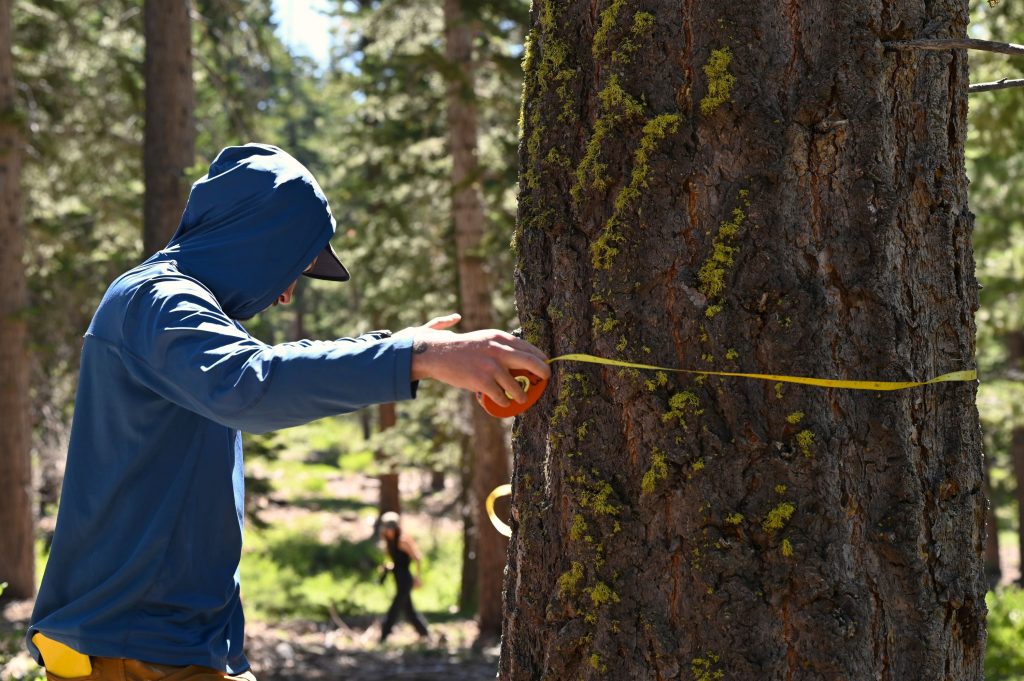
-
Sensors are placed around Lake Tahoe to record live data of changes in the ecosystem
Provided / Sudeep Chandra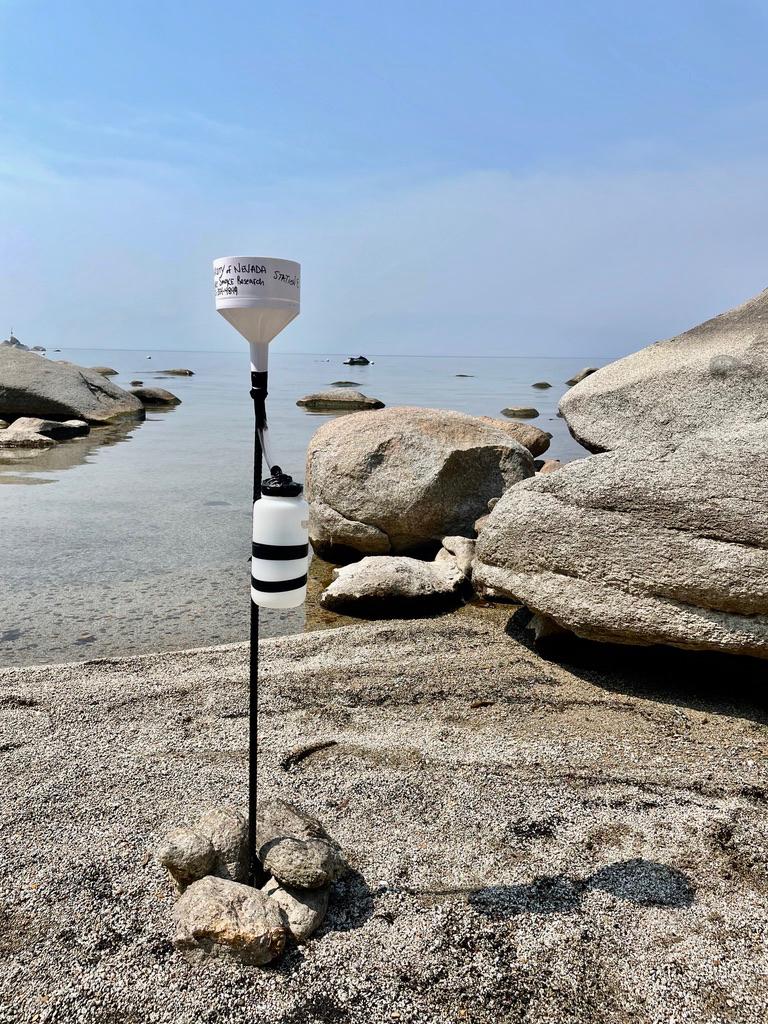
-
Collecting samples at the bottom of Lake Tahoe can be tricky, but with help from professional divers, University researchers like Kelly Loria are able to get the data needed for long-term monitoring.
Provided / Kelly Loria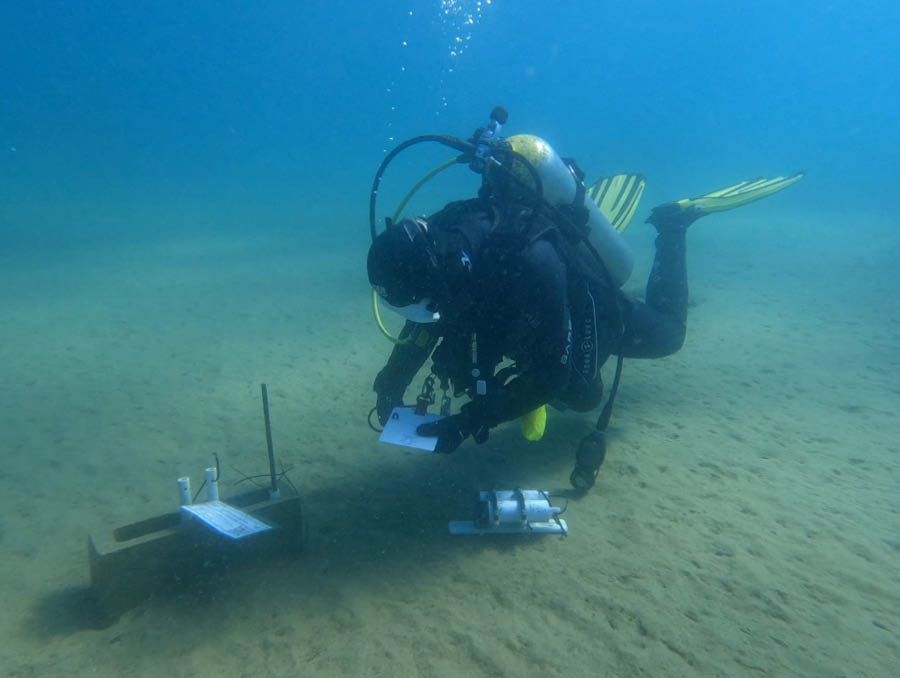
-
-
Testing water samples right on the research boat ensures the most accurate data.
Provided / Ian Von Herbulis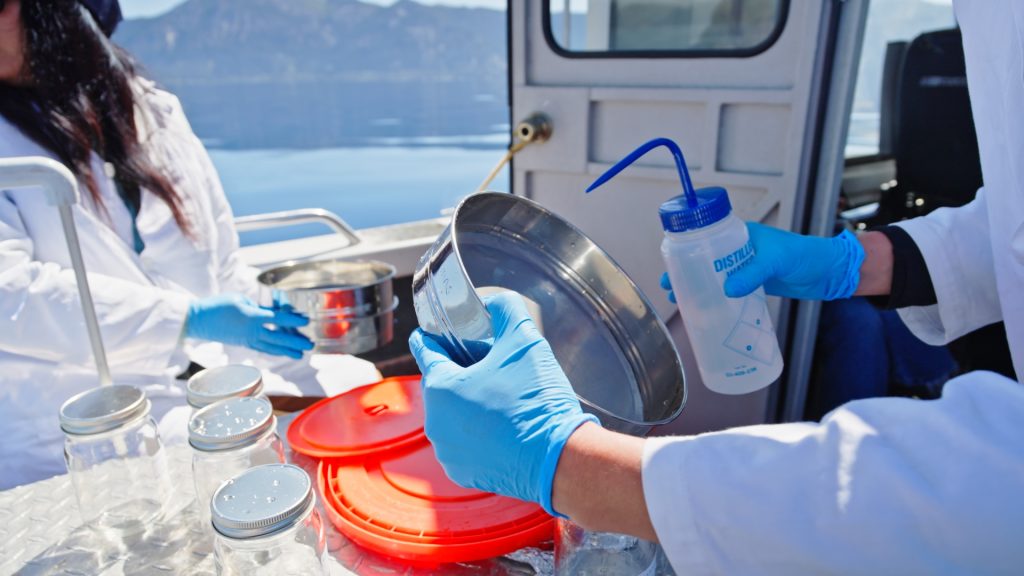
Other projects cast a wider lens, like the institute’s Journal of Lost species. In collaboration with the Museum of Natural History at UNR, the journal aims to record ongoing extinction events as stressors weigh down on biological diversity. Recording species before they are forgotten can facilitate identifying lost species in the event they are rediscovered.
Another initiative emphasizes the institute’s value for documentation through journalism and media. In partnership with the Reynold’s School of Journalism at UNR, the institute is developing international media fellowships focused on sustainability and freshwater.
Journalism isn’t the only cross-field collaboration. The institute hopes to educate and spark dialogue through art and expression in partnership with the Nevada Museum of Art and UNR Art Department.
The public can sign up for more information and learn more through these resource links below:
Institute’s website: unr.edu/tahoe-institute
The Journal of Lost Species: journaloflostspecies.org
Tahoe Environmental Observatory Network (TEON): storymaps.arcgis.com/stories/b00897f53f214272ae5800544c6bec25
“I think it’s important to be educated in the changes that are happening and then also to bring that discourse and dialogue back to the dinner table at home,” Chandra says in discussing how the public plays a vital role sustainability.
Public observations have also proven critical in keeping tabs on the lake.
“The public is the early warning system for the lake.” Chandra says. “They might see something before managers do, before scientists do.”
Reducing, reusing and leaving no trace are also ways the public can do their part in the realm of sustainability.




Support Local Journalism
Support Local Journalism
Readers around the Lake Tahoe Basin and beyond make the Tahoe Tribune's work possible. Your financial contribution supports our efforts to deliver quality, locally relevant journalism.
Now more than ever, your support is critical to help us keep our community informed about the evolving coronavirus pandemic and the impact it is having locally. Every contribution, however large or small, will make a difference.
Your donation will help us continue to cover COVID-19 and our other vital local news.